Life In Motion
From Titanic ingénue to a paranoid autocrat in The Regime, Kate Winslet’s decades-long career continues to redefine what it means to be a leading woman on her own terms.
Interview by Fabián Waintal | Introduction by Elia Essen | Photography by AMPAS, HBO and Roadside Attractions
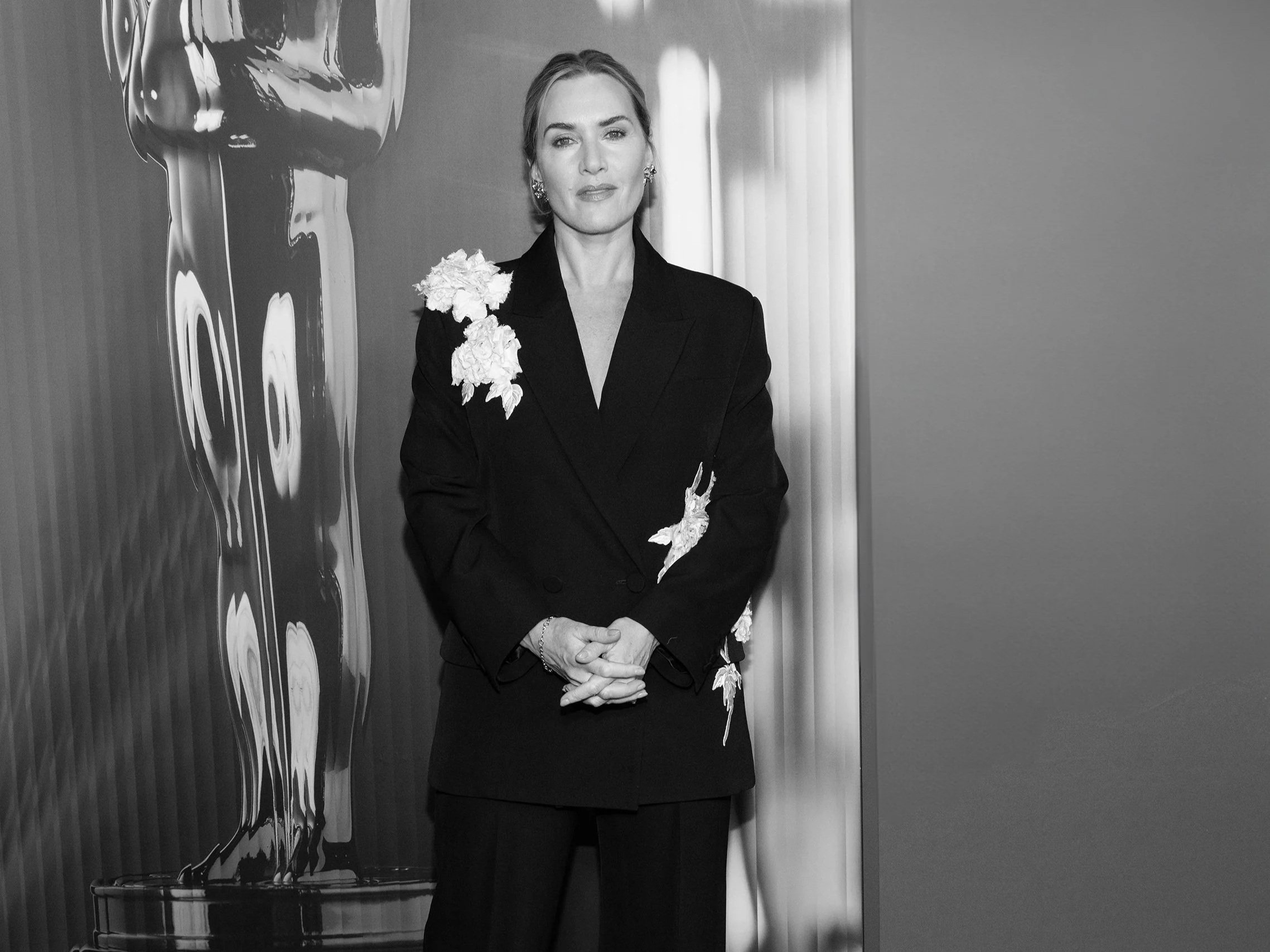
Kate Winslet, 2024 x Governors Ball Oscar
Photography courtesy of AMPAS
When Kate Winslet stepped into the global limelight in the late 1990s with the release of blockbuster hit Titanic, it launched her (and the heroine she plays, Rose) into cinema history books—the iconic film would sweep the Oscars that year, smash box office records and become one of the most widely known tragic love stories of all time. Just 20 years old at the start of filming, Winslet brought to the film a breathtakingly raw performance and magnetic on-screen chemistry with co-star Leonardo DiCaprio that were crucial to Titanic’s success.
Though Winslet’s roles since then have been numerous and varied, a through-line has remained consistent: the British actress embodies complex women, at once both soft and vulnerable and powerful and brave, bringing a nuanced and multidimensional understanding of femininity to each character. Be it loveably quirky and impulsively manic Clementine in Eternal Sunshine of the Spotless Mind, the effortlessly glamorous though traumatized and revenge-seeking Tilly in The Dressmaker, or the unlucky in love writer, Iris, looking for escape in L.A. in The Holiday.
Winslet is also not afraid to step into the shoes of a villain, as she does in the 2008 film, The Reader, to play a Nazi guard, a role that earned her an Oscar, and the 2024 HBO series The Regime (which she also produced) to become a paranoid and power hungry though charming autocrat. Also on her growing list of producing credits: Lee, a haunting historical film in which she plays model turned World War II photographer Lee Miller. To each, she brings a piece of herself; well-spoken, witty and elegant, each character is brought to life through Winslet’s extensive research and preparation.
Now 50, Winslet is just getting started—both on and off screen. The actress continues to be an outspoken advocate for body positivity, denouncing unrealistic beauty standards and embracing the lines that come with age (she notably refused to have her face retouched in Mare of Easttown). The star is poised to make her directorial debut in December with Goodbye, June, a drama about a fractured family navigating a mother’s worsening health over Christmas. Also on the horizon: a new documentary on King Charles’s foundation narrated by Winslet.
Winslet sums it up in an exclusive interview with journalist Fabián W. Waintal: “I'm not going anywhere, just so you know.” In their conversation, she opens up on the changes she’s witnessed in the industry, empowering female directors, and the characters she most looks forward to playing. Read on for more.
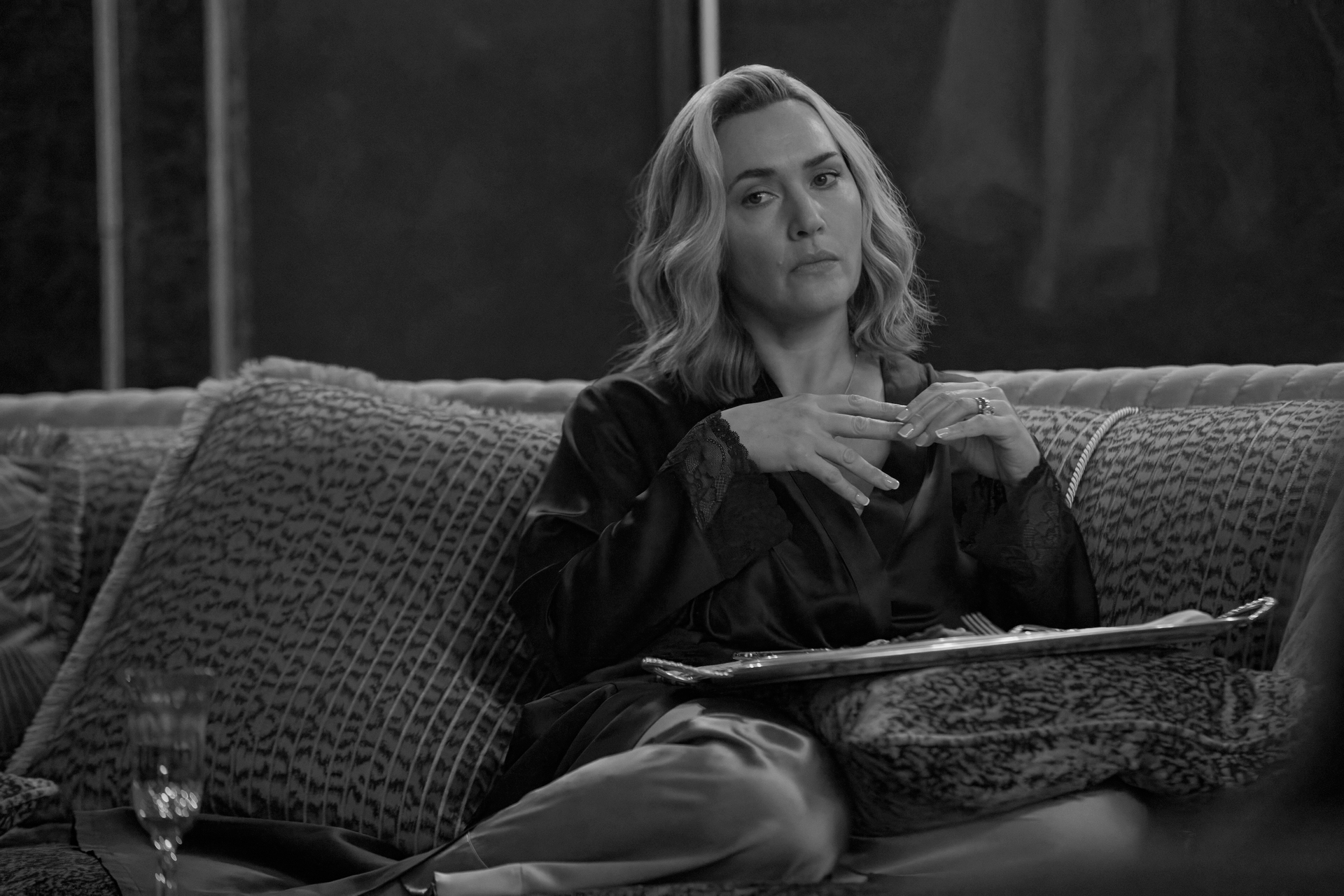
Kate Winslet, 2024 x MAX The Regime
Photography courtesy of HBO
Fabián W. Waintal (FW): You received a Lifetime Achievement Award at the Zurich International Film Festival, just before turning 50. Do you realize everything you have accomplished?
Kate Winslet (KW): It was my birthday October 5 and I am very excited to be 50. It's a very thrilling time. But I'm not going anywhere, just so you know. I don't even think much about legacy. What matters most to me is telling stories and making films.
FW: What’s the biggest change you see today, when you look back in time?
KW: The film and television industries have changed dramatically, in a fantastic way, especially with streaming services offering long-form dramas. Despite these changes, there is something special about watching a film in a cinema, which shaped my love for storytelling. When I was younger, there was also a sense that if you were employed as an actress, it was better to just be grateful and don't complain, because nobody likes a girl who complains. That is changing. That has changed. I see a greater sense of self confidence and awareness in younger actresses today. There’s a sense of pride in who they are, more open. That is something that I see everywhere, and it's a wonderful thing.
FW: Has your passion changed over the years? Do you still feel as excited about your work as an actress today?
KW: I do appreciate the job that I do today, more than ever before. I’ve always been someone who wanted to do this job, and it's not just about playing interesting parts; it's about much more. I care about having the whole experience for the entire cast and the film crew, hoping it will be the same for an audience. And as time went by, I started to understand the emotional significance of telling stories that may not have been told otherwise, certain stories about real women who did incredible things.
FW: The glamour of a premiere and red carpet is part of the job today?
KW: Well, I find walking down the red carpet more challenging than acting in a movie role, even when I'm covered in sweat. There’s too much planning into the right outfit for the red carpets. And the best way to balance that is to enjoy them both.
FW: The hardest decision you ever had to make in life?
KW: I can’t point out a specific hard decision. Life is the best roller coaster. We make decisions all the time. Life is very strange, and we all try to figure it out.
FW: Is it true that an artist becomes a better artist when you suffer in real life?
KW: I don’t know... I could say that we are lucky that we live within fictional behaviors. It’s fascinating, there’s always a new experience. It could be photography, cooking or other things we might never master in real life. We're acting, but we love what we do very much.
FW: Do you always prepare for every movie role? Have you ever tried to start a movie without special training or research about your character?
KW: I love to feel prepared whenever I start a new film. And yet, on day one, I feel like I've done absolutely no preparation whatsoever, like I've never made a film before, and I’m a complete shit. That is why I feel that I need to be ready, even when I end up throwing it all away.
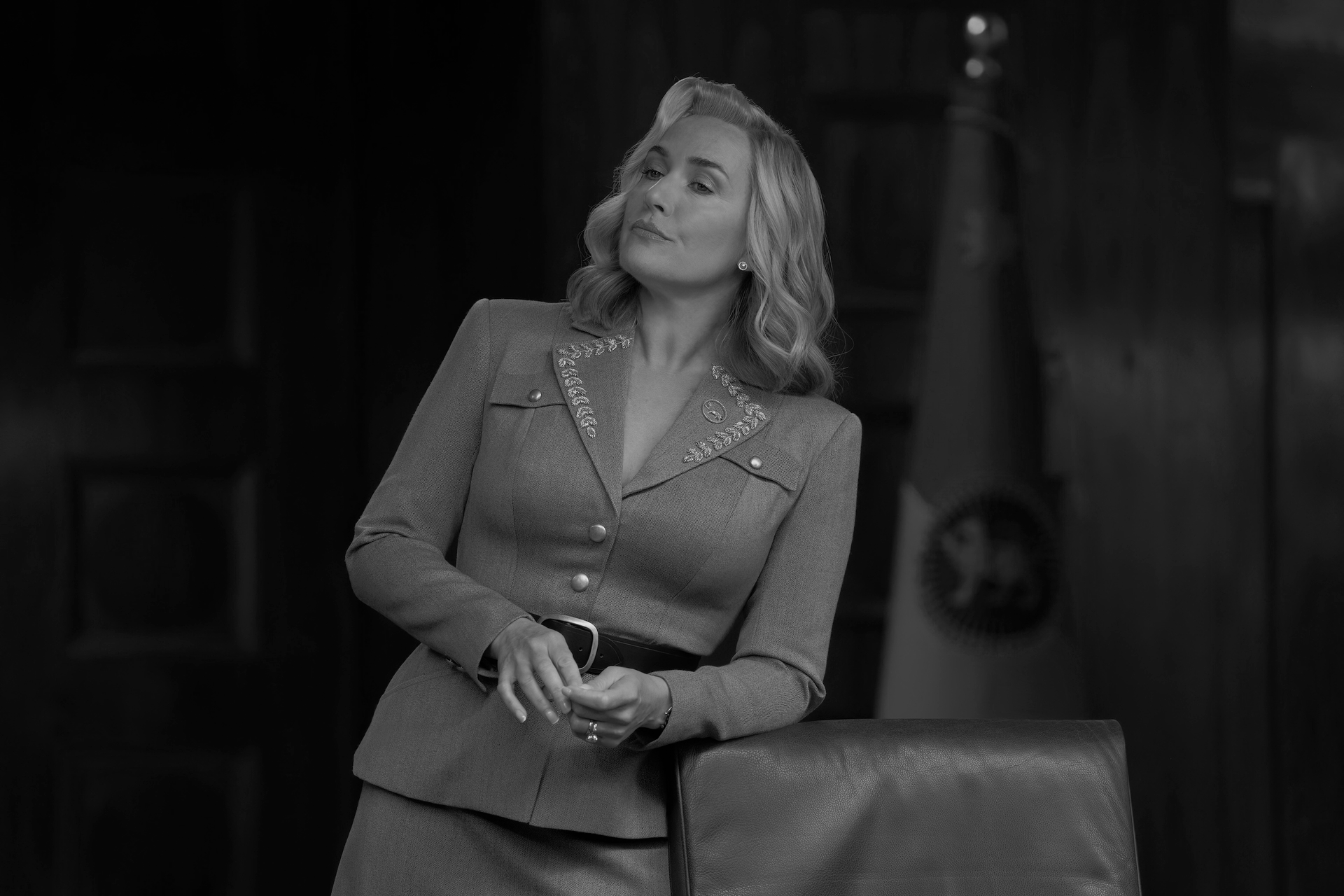
As time went by, I started to understand the emotional significance of telling stories that may not have been told otherwise.
Photo: Kate Winslet, 2024 x MAX The Regime
Photography courtesy of HBO
FW: What movie characters do you identify with the most?
KW: Well... when you see Clemetine in the movie Eternal Sunshine of the Spotless Mind, she is very different than any roles I've done, but believe it or not, she's actually closer to me than most period movies I've done. I don't wear corsets; I wear jeans. She was much more me than people know. But it's hard to be specific about me and any relationship with my roles, the same way I find it hard to talk about my acting process.
FW: What about other new changes in the film industry and having more women behind and in front of the camera?
KW: That is really changing. And I'm excited to see how much more it will change, because I think there's a big surge coming. At least it feels that way. I hope I'm not wrong about it. I mean, one can never know, but I think some things are changing.
FW: Has the #MeToo movement helped in any way?
KW: I think that since the #MeToo movement, it has changed the space that we give to one another. Female friendships feel more vital now than ever before. And I think that we're listening to women's stories with new ears. And that goes for women and men. Globally, we listen in a different way. And frankly, women deserve it, for sure.
FW: Why do you think it has taken so long for women to become directors in the film industry?
KW: A large part of the reason why there were not as many female directors is because we were busy having families. When you spend your life raising children, that's an automatic priority that it is harder to put down and figure out a way to go to work and keep an eye on how everyone is at home, at the same time. It’s a greater juggle for women. And I think the film industry is starting to get better by creating a working environment that is more accommodating in that regard. People can bring their children to work sometimes and everyone works much better that way. It's a conversation that's happening more and more. And as time goes by, we should be able to see a bit of a shift in the actual length of film working hours, which is still very long. That’s something that is also starting to change. Some people are already helping with slightly easier working hours for women. That’s why I think a lot is changing.
FW: Have you heard new perspectives from the younger generation?
KW: Yes, and I find there’s one thing abundantly clear: that younger actresses, they now have a voice in a way that 15 or 30 years ago, was not even a space that existed for a woman. When today they say, “I don't think I'm comfortable with that,” that’s something that didn't exist before.
FW: Two of your children are actors, too. Mia worked with you in the TV movie I Am Ruth and Joe appeared also in your last film, Lee. Did they ask for it? Did you encourage them to follow in your footsteps?
KW: Lord, I hoped they would not. They are encouraged to do what they want to do, regardless. When my daughter decided to be an actress, I supported her and if my son decided to be a farmer, I would have asked him to show me how to milk cows [laughs]. I never wanted to stand in their own decisions, whatever they choose.
FW: Did you just say you hoped your children wouldn’t become actors?
KW: It could be a soul-destroying experience if you can't get to work. It can be tough. In any form of artistic expression, at least 50 per cent of it has to do with confidence and self-belief. And if you don't have that, you're totally screwed.
FW: What are the characters you look forward to playing today?
KW: I was inspired by [the war photographer] Lee [Miller], and I've been overwhelmed by that story, because it was not a film about a war; it was a film about a woman. And if I'm ever able to play a character in the future like that again, it would be an absolutely wonderful honour. The way that we live, we sometimes forget that we're busy thinking, on our phones and so much work and our children, all of it. And we forget to stop and think “I am proud of myself for that,” especially as women. And I'm really enjoying saying, “I'm proud of what I’ve done.” That's a good feeling.
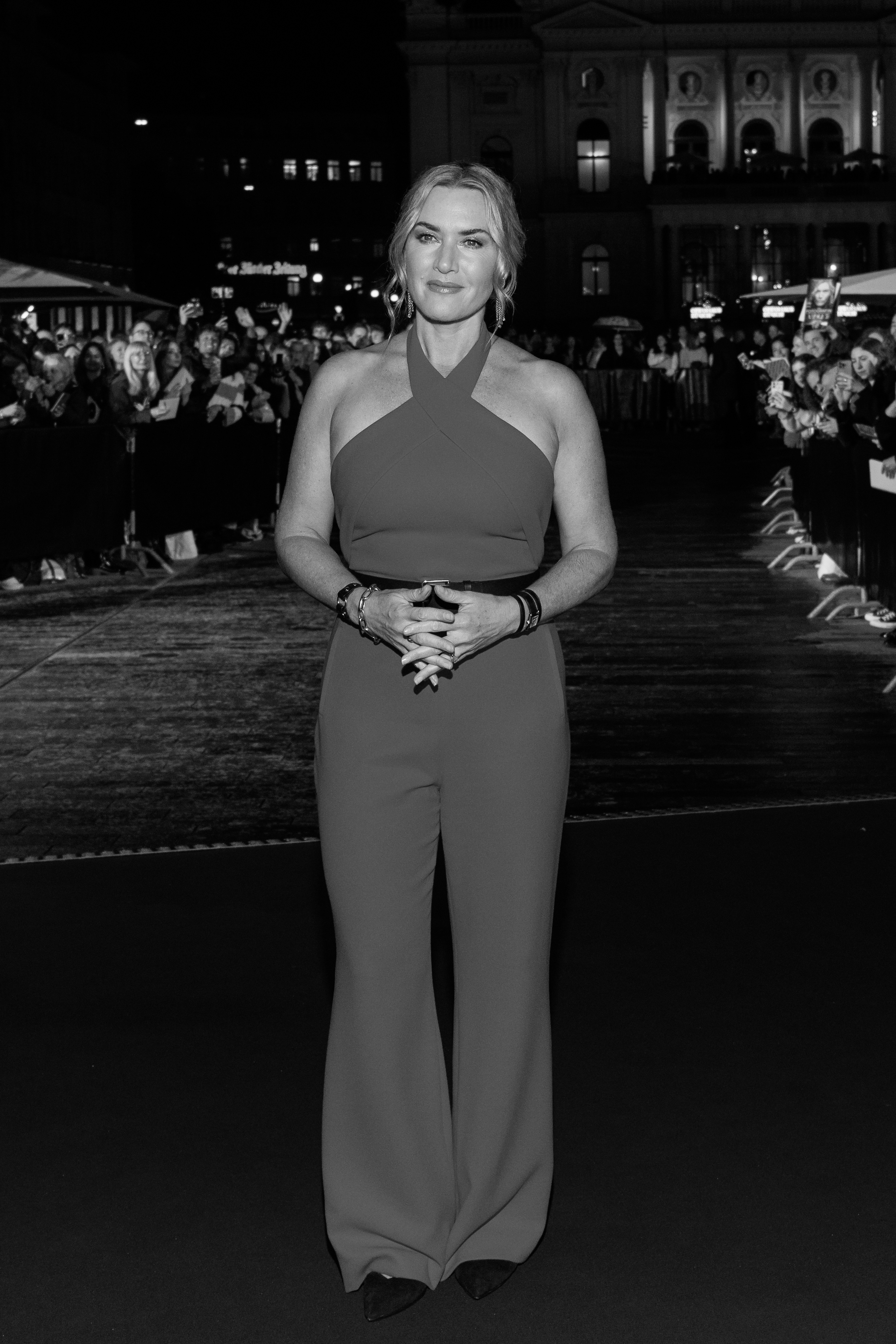
Kate Winslet, 2024 x Zurich Film Festival
Photography courtesy of SCAD Zurich Film Festival
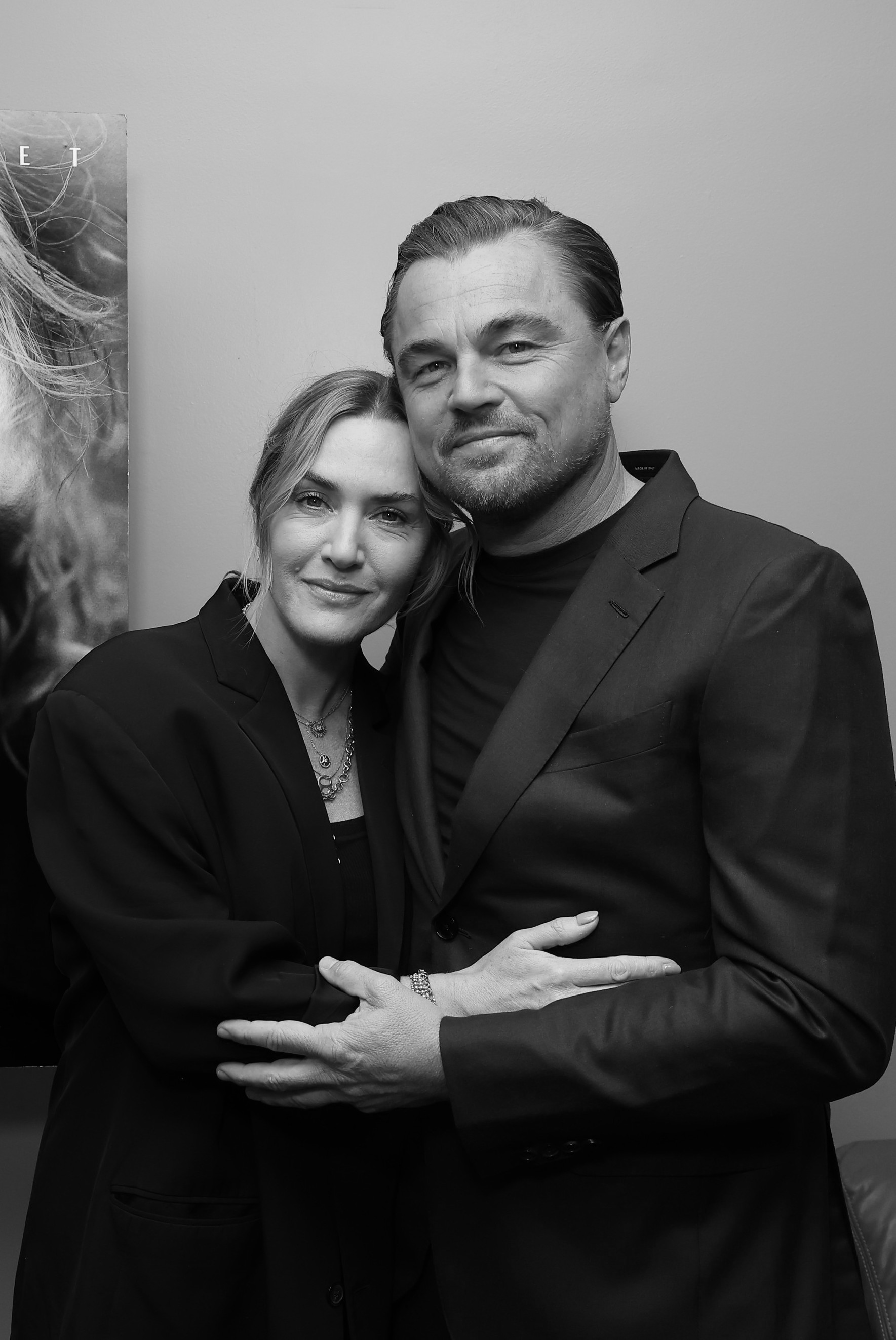
Kate Winslet, 2024, and Leonardo DiCaprio
Photography courtesy of Roadside Attractions
We forget to stop and think 'I am proud of myself for that,' especially as women. I'm really enjoying saying, 'I'm proud of what I've done.'
FW: Is it true that your love of antique tables had a lot to do with the movie about the war photographer, Lee?
KW: Yes! A friend of mine called me to say there was an incredible table where Lee Miller would eat with her friends and her lover Roland Penrose. The history was extraordinary. So, I bought the table, not polished at all, it felt like an old friend. And when I sat at the table, I thought, “I wonder why nobody has ever made a film about Lee Miller.” That was interesting. I immediately tried to look into the rights, and I was fortunate that Lee’s son, Antony Penrose, was able to open his mother’s archive to me along with her life, her work and her stories. I also learned photography. I couldn't believe the light meter alone drove me more insane than the camera itself. I've always been fascinated by photography. I have lots of photographers in my family. My children did it at school, and as a mother I used to stand back and let them do it, thinking “Okay, I'll wait for my turn.” And playing Lee was so good for me because it meant I didn't have to wait for my turn anymore.
FW: Is there a big difference when you make an independent film like Lee and the HBO series The Regime or a big production like Titanic?
KW: Well, it’s really difficult to make independent films because it means finding private financing. That could come from a small company, a film company or individuals who want to get involved in the film industry. And a studio film, the entire film is funded by a studio, so you have an infrastructure that is slightly handed to you on a plate. So when you make an independent movie, we have nothing handed to us on a plate. We need to go and fight for every penny. Just like we had such a low budget for Ammonite. People showed up because they wanted to tell those stories. Sometimes we get those opportunities to do small but incredibly rewarding pieces, often more connected. Now, what's important is the people you are going to work with each day, to tell a good story together. A director once said, “There are two kinds of actors, the ones who love back and the ones who run from it—which are you?”
FW: Could we talk about the Academy Awards?
KW: As an actress, I can’t ever expect to get that honour. It's an extraordinary thing to receive an Oscar. I just feel amazed to be able to say that I have been nominated. It's a really thrilling experience. I'm really proud. It's not something that I thought it could ever happen as an aspiring young actress. You barely think you're going to even get a job. And to be in that position is always remarkable. It's never been something I take lightly.
FW: You have been nominated for the Academy Award seven times. What would it mean to be nominated again?
KW: I can’t answer that question because I don't know how to [laughs]. But certainly, I've been really lucky in my life to have worked with fantastic actors and directors who have played a big part for me to be nominated at all, let alone winning [an Oscar]. I've certainly had wonderful triumphs and moments that I've been very fortunate to share. I've just been very lucky.
Related Posts