
Curve Appeal
In her years of experience as creative director of Binns Kitchen + Bath Design, designer Beverley Binns has seen plenty of trends come and go, so when one lingers, she takes note. he latest sweeping the design world? Soft design, with its curves, warm hues, and a decidedly human touch. We caught up with Binns to learn how she’s bringing this movement to life in kitchens and baths—and why it’s redefining what luxury really means.
By Charlotte Bushnell-Boates
Living Luxe Magazine (LL): From furniture to doorways to decor, curves are everywhere we look! Why are curves so popular in design right now?
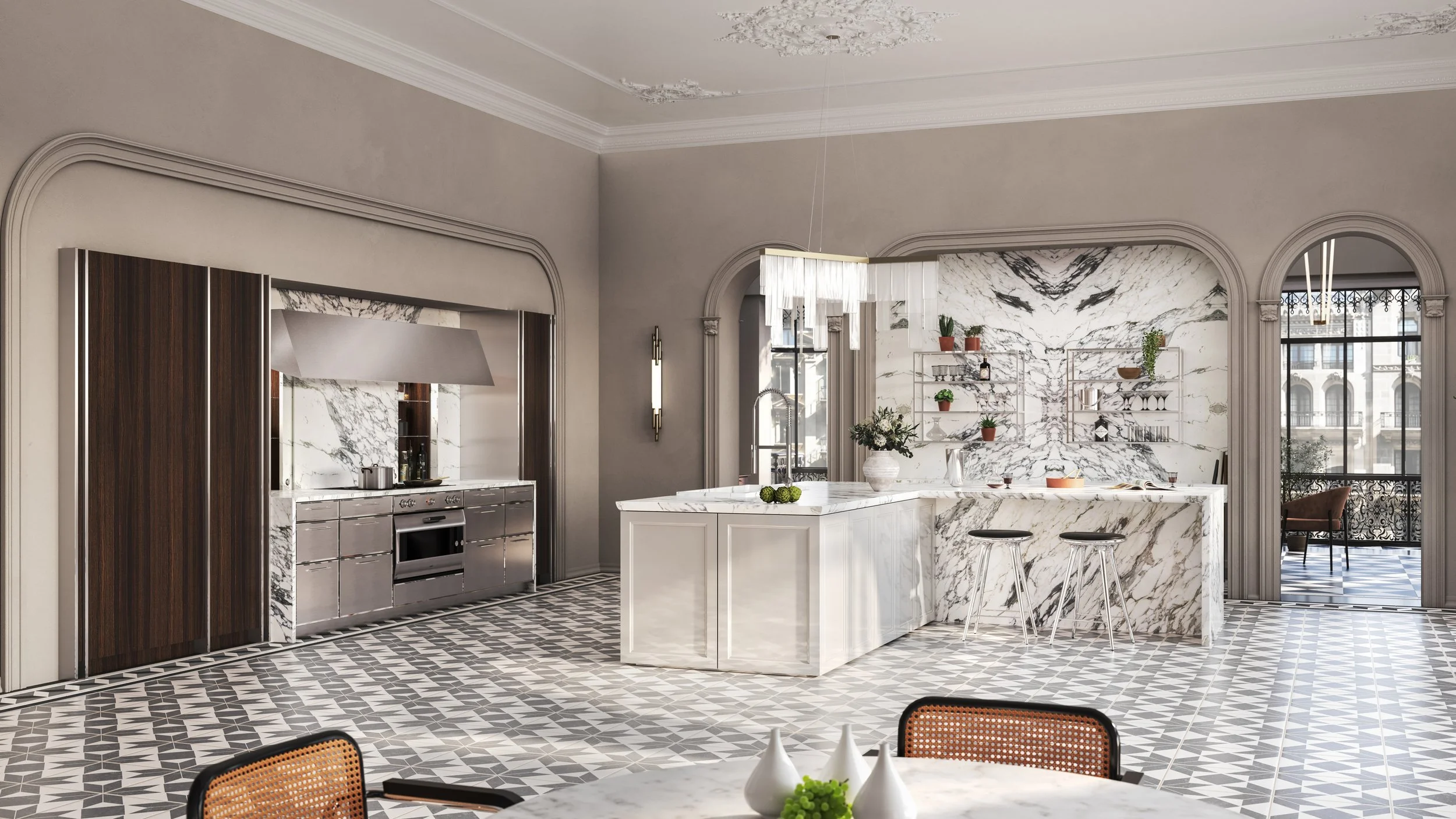
Beverley Binns (BB): We’re in a moment when people are craving softness, not just in materials but in form. Curves feel calm, intuitive and deeply human. They take the edge off rigid architecture and introduce a sense of flow. I think it’s part of a larger shift. We’re moving away from sterile minimalism and leaning into spaces that feel more personal, emotional and layered. A curve can be quiet, but it changes everything. It invites you in.
LL: How are you incorporating curves into kitchens today?
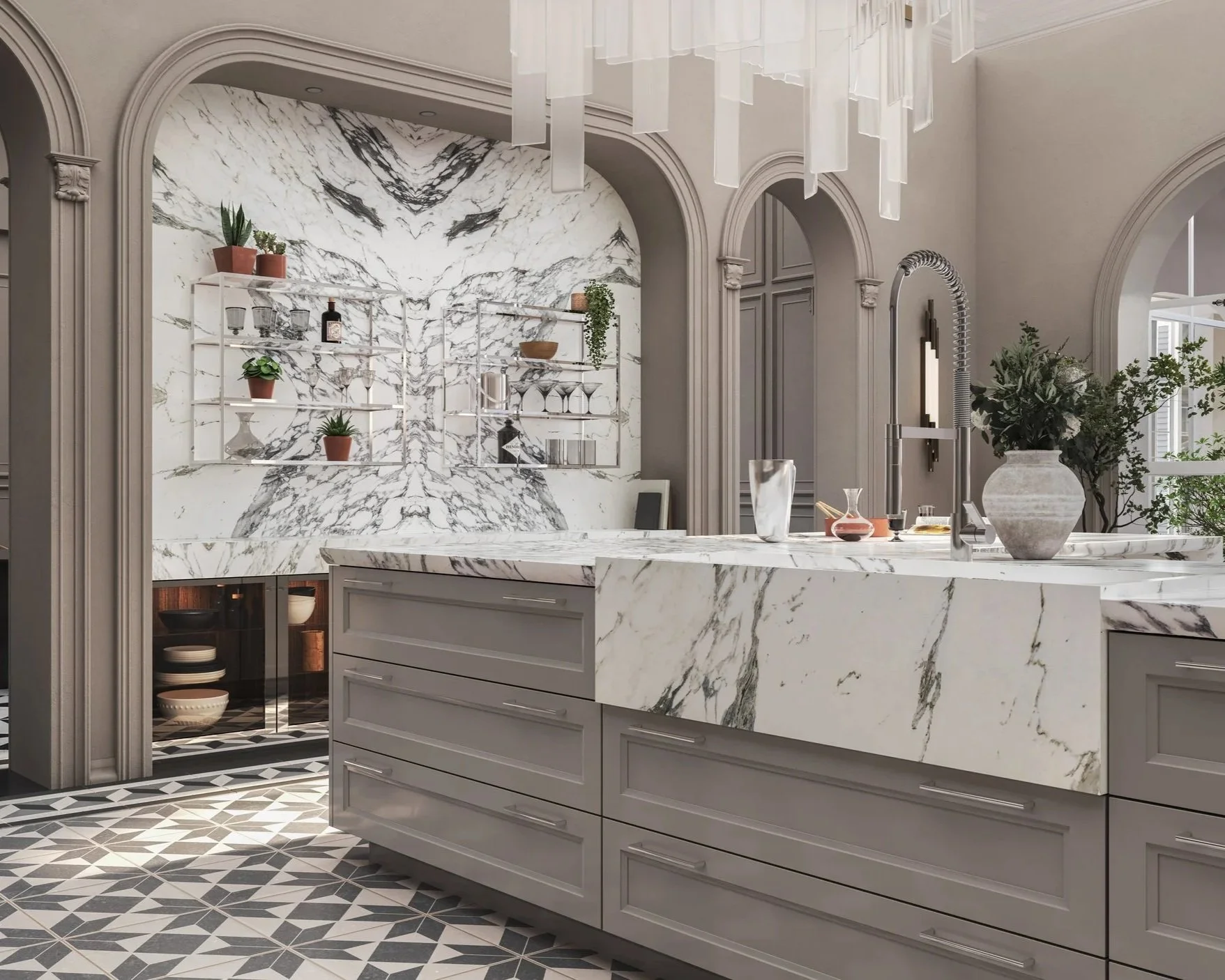
BB: Curves are showing up in so many thoughtful ways: arched openings, rounded island corners, sculptural range hoods and even softened cabinetry edges. We’re also seeing fluted wood details and custom millwork that play with rhythm and shape. In a kitchen, it’s about balance. You don’t need everything to curve. One or two sweeping gestures, such as a curved peninsula or shelving detail, can create that sense of softness and motion that makes the space feel more considered.
LL: How is our definition of luxury evolving in today’s design landscape?
BB: Luxury today is far more personal. It’s less about labels or lavishness and more about how a space feels and supports the way you live. Quiet luxury had its moment. Now we’re seeing a gentle evolution. Clients are asking for homes that are rich in texture, warmth, and intention. The new luxury is a lived-in kind of elegance, curated over time, rooted in craftsmanship, and always grounded in meaning. It’s what I call emotional design.
LL: In spaces such as kitchens and bathrooms, how do you balance function and beauty?
BB: For me, it starts with listening. A space should work beautifully before it looks beautiful. Once the layout supports your lifestyle, how you cook, move and gather, we layer in the materials, lighting, and details that elevate the experience. In kitchens and baths especially, beauty and utility have to be in constant conversation. That’s where the magic happens. When a drawer opens just where you need it, and the light hits the tile in a way that still catches your breath.