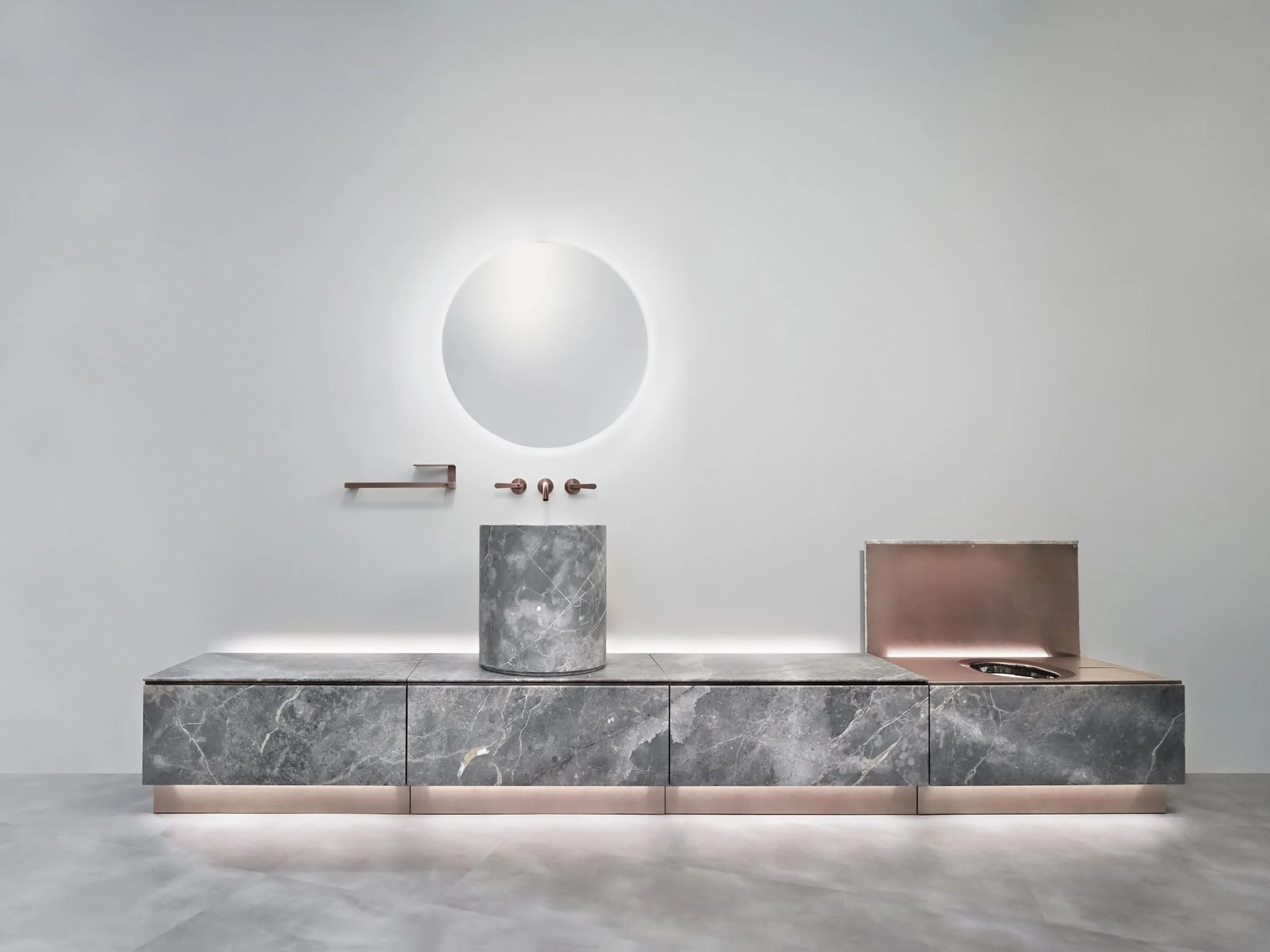
Meet the unexpected material that’s about to transform your kitchen.
By Victoria Kuglin
Certain images come to mind when we hear the word “kitchen”: perhaps a marble countertop or a well-stocked pantry, maybe dark wood cabinetry or a backsplash of intricately detailed tile. Rarely, if ever, does porcelain make the list.
That’s exactly what Porcelanosa aims to change. For more than 50 years, the Spanish-born company has been revolutionizing household materials—specifically by introducing porcelain stoneware to unexpected places.
“We consider ourselves a one-stop shop,” says Balma Sales Diaz, marketing manager at Porcelanosa USA & Canada. “When customers come in, they can do a full renovation of the house.” The company may have started with wall and floor tiles, but its scope has since grown well beyond bathrooms and shower stalls. Porcelanosa has been making waves in the design industry, completing projects everywhere from high-end resorts to international airports and winning the prestigious National Innovation Award in 2019.
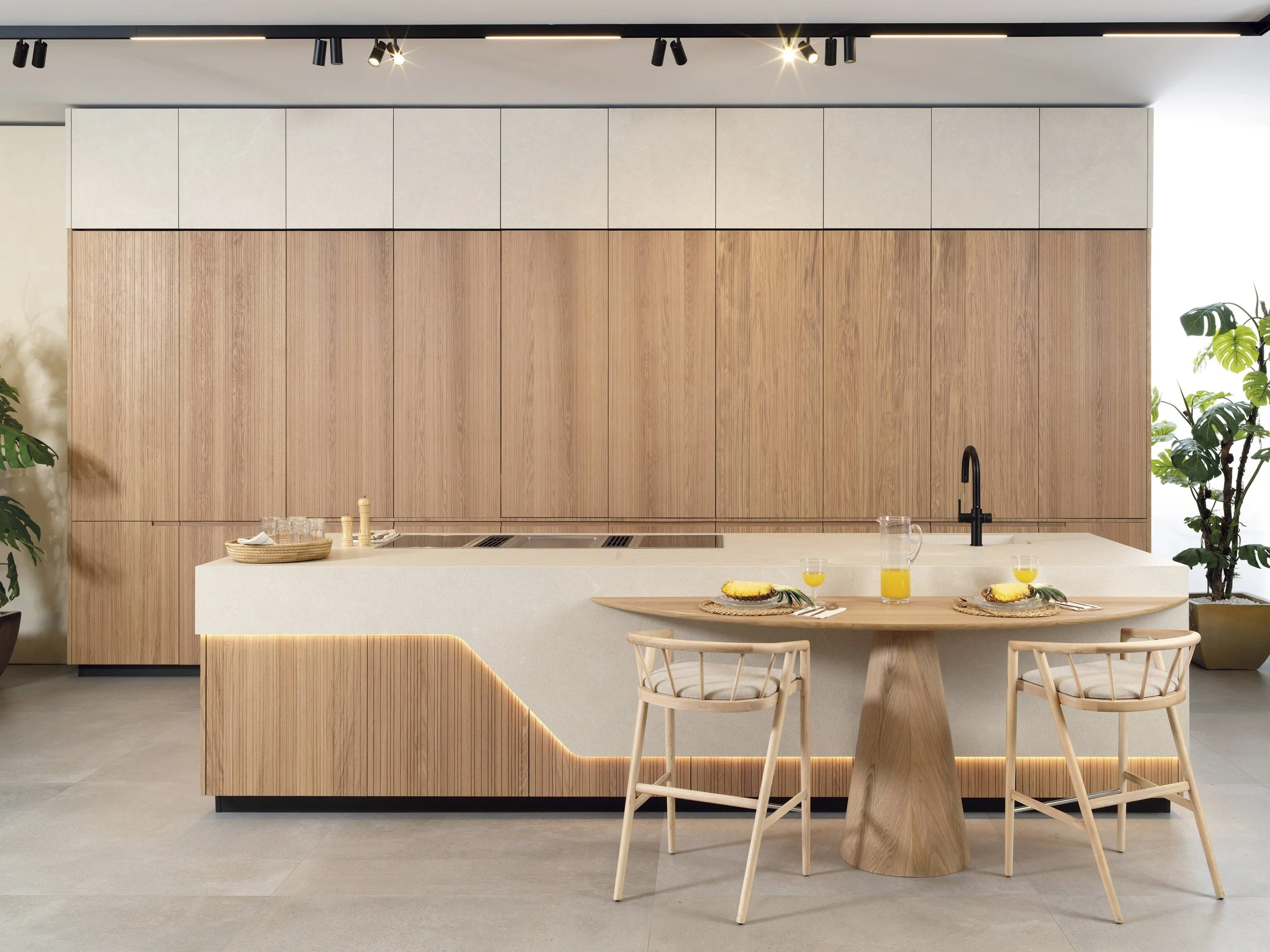
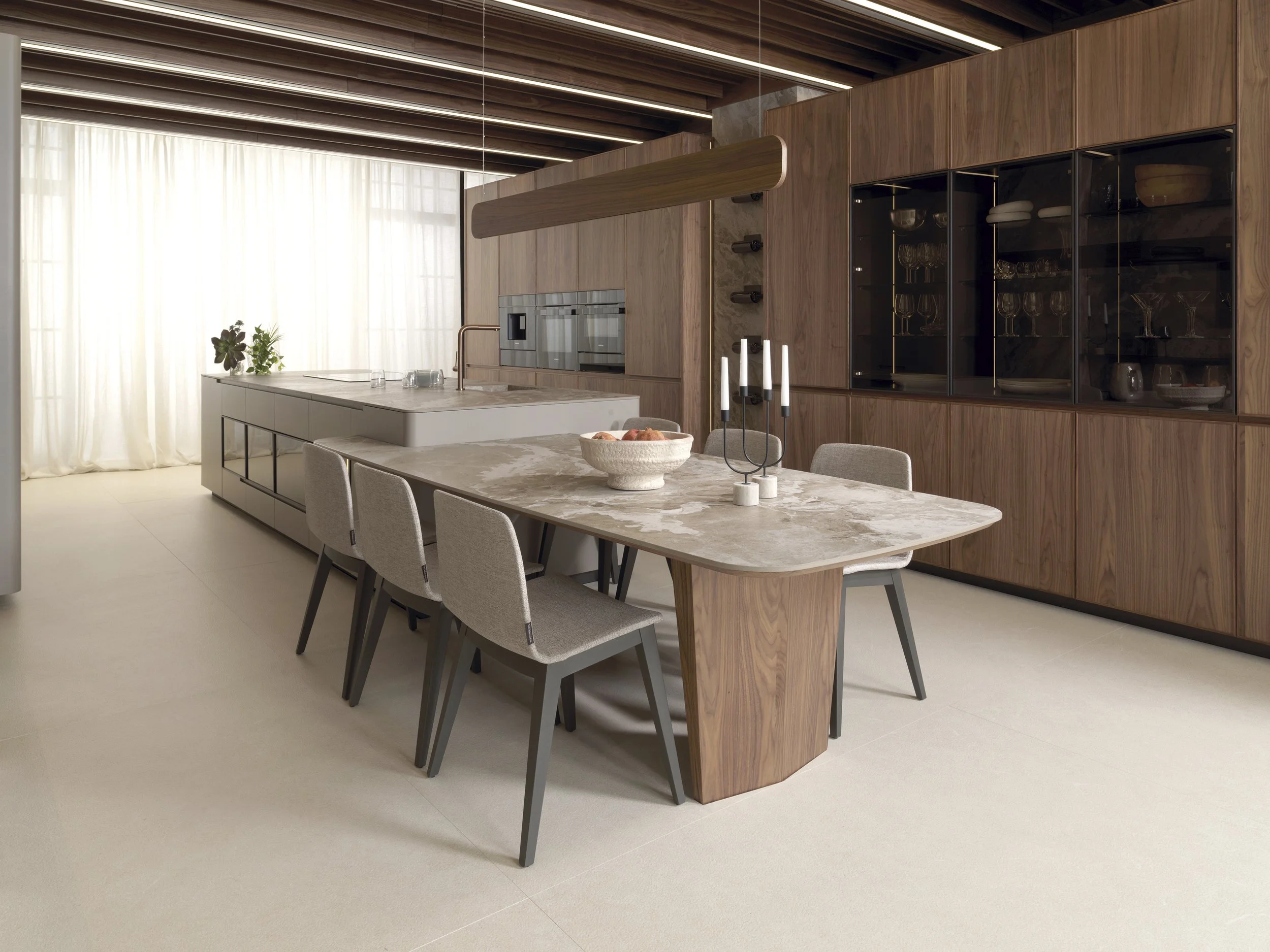
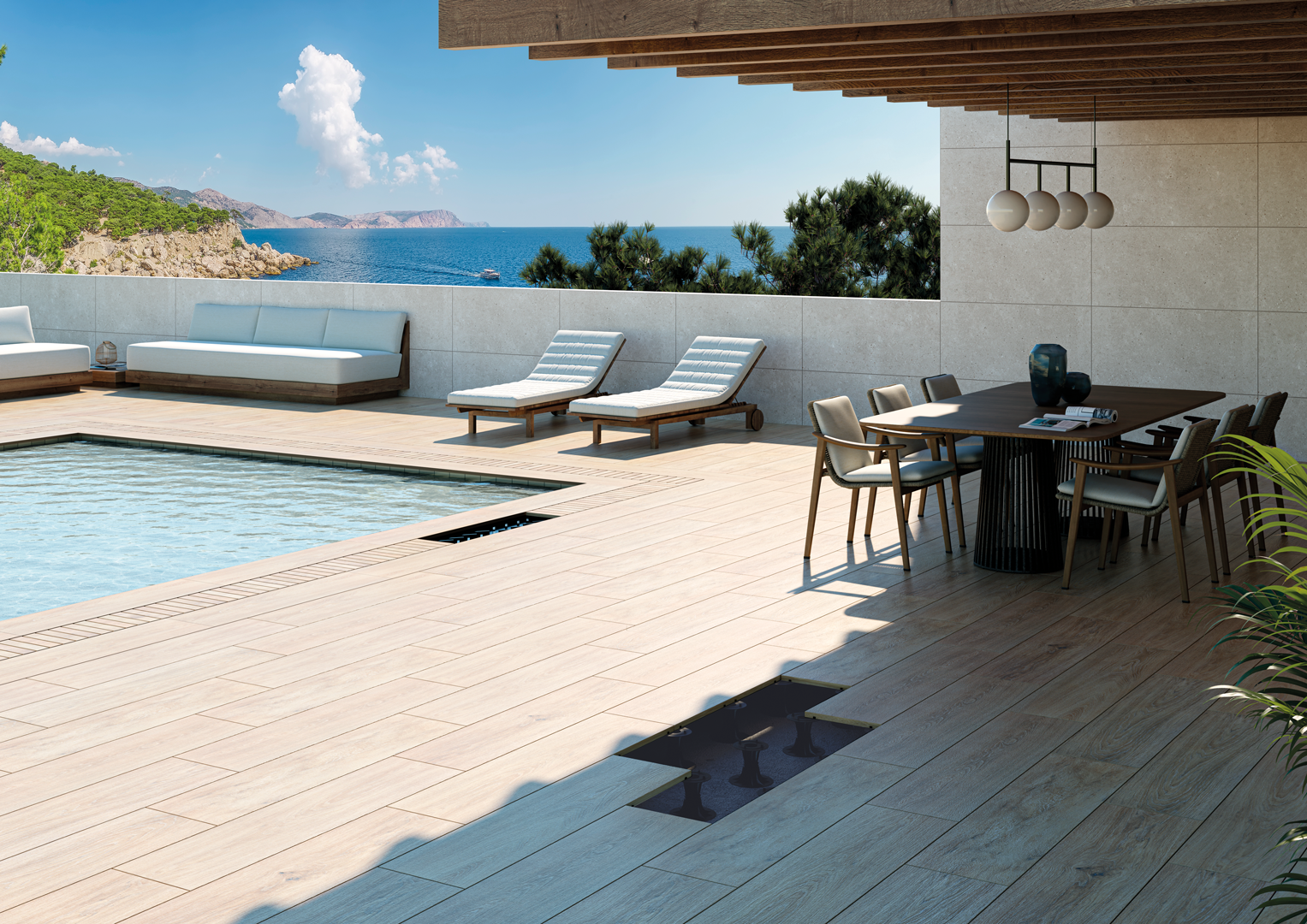
Lately, though, its kitchens have taken centre stage. Regardless of the space (Diaz says Porcelanosa has tackled every size, shape, and style of kitchen imaginable), the company’s range of options, such as the wood-look Par-Ker, gives homeowners and designers alike a veritable smorgasbord of choice.
In kitchens, where space is often at a premium and traffic is at a maximum, intentionality and durability are top priorities. The company’s XTone porcelain countertops are large-format slabs made to mimic virtually any stone or material, with all the beauty and none of the weaknesses. This autumn, Porcelanosa is seeing growing demand for classic aesthetics, particularly marble-look options such as Calacatta Gold and Calacatta Antico, along with the minimalist Glem White. Without a gemologist’s loupe, it’s nearly impossible to distinguish these slabs from natural stone—and that’s the whole point.
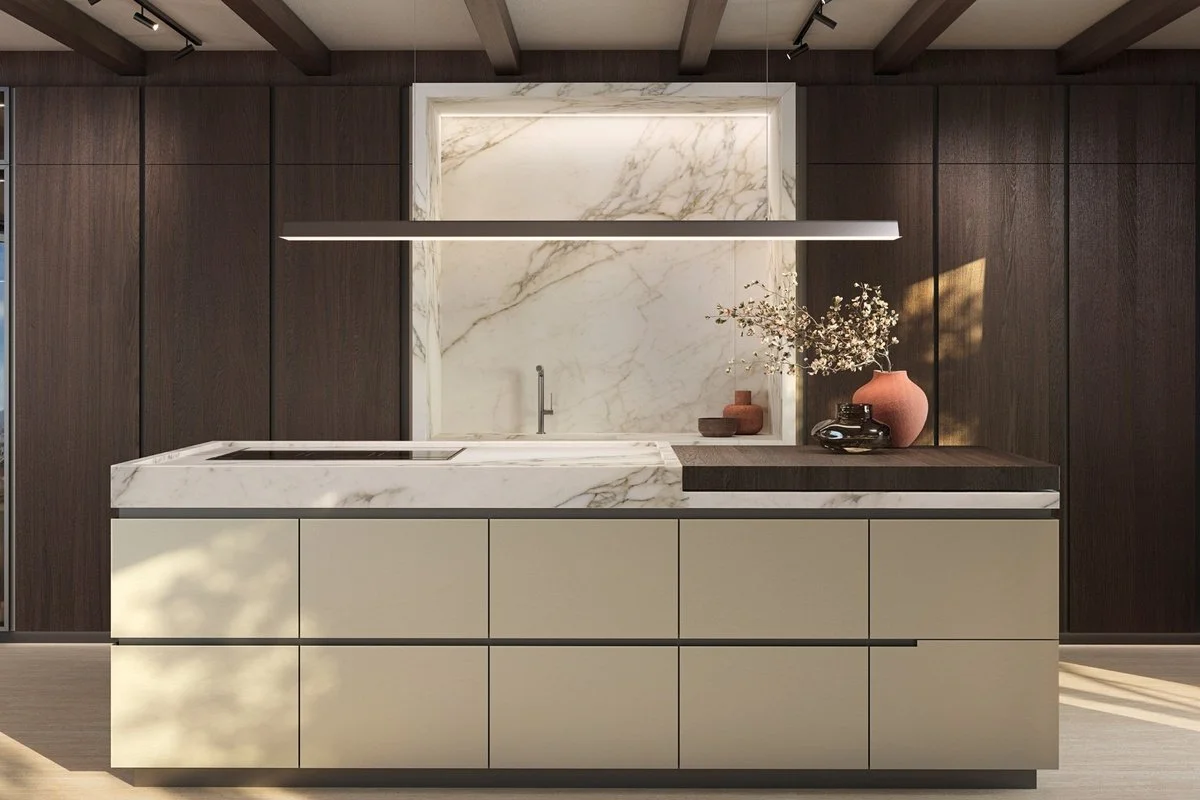
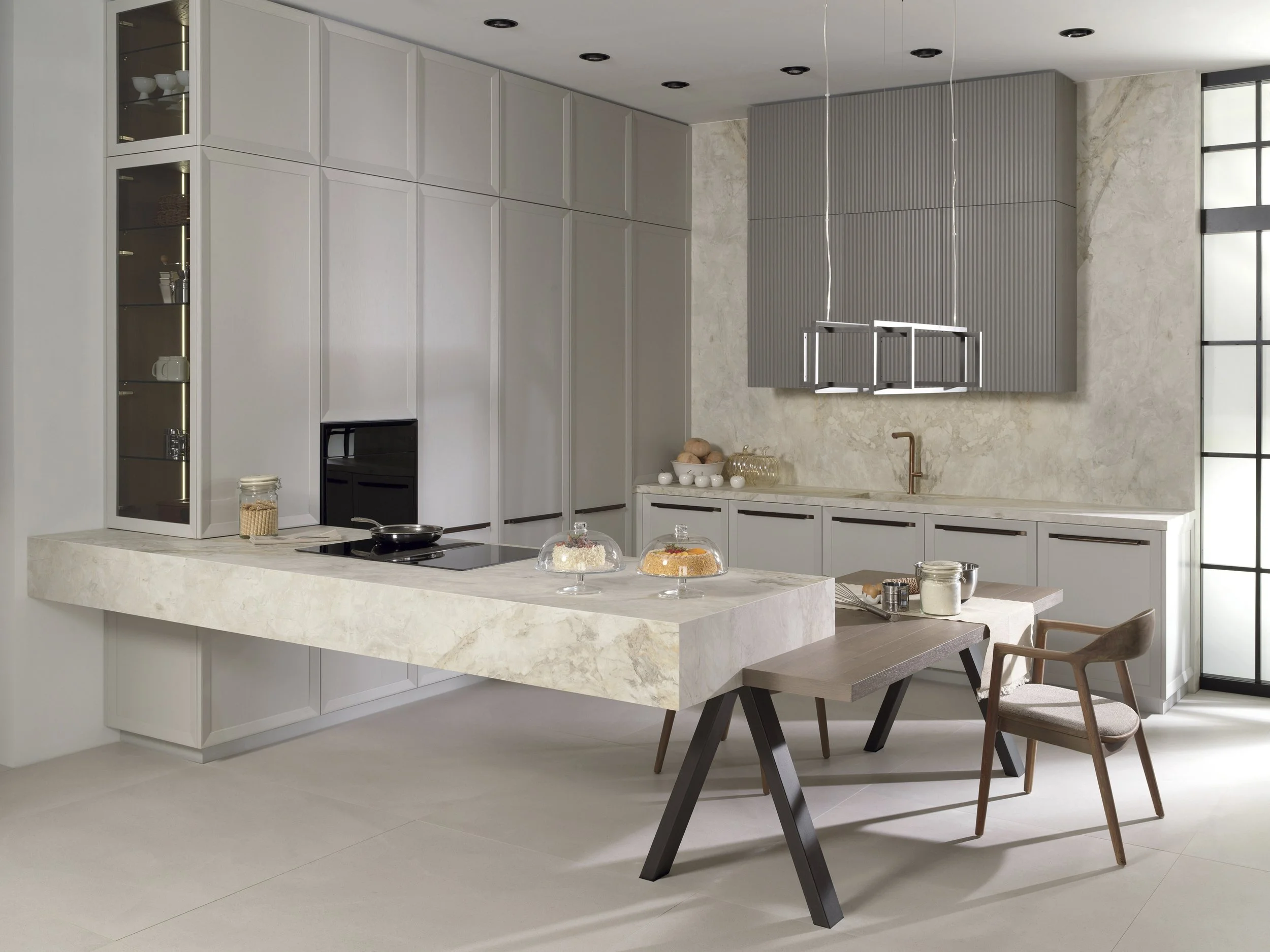
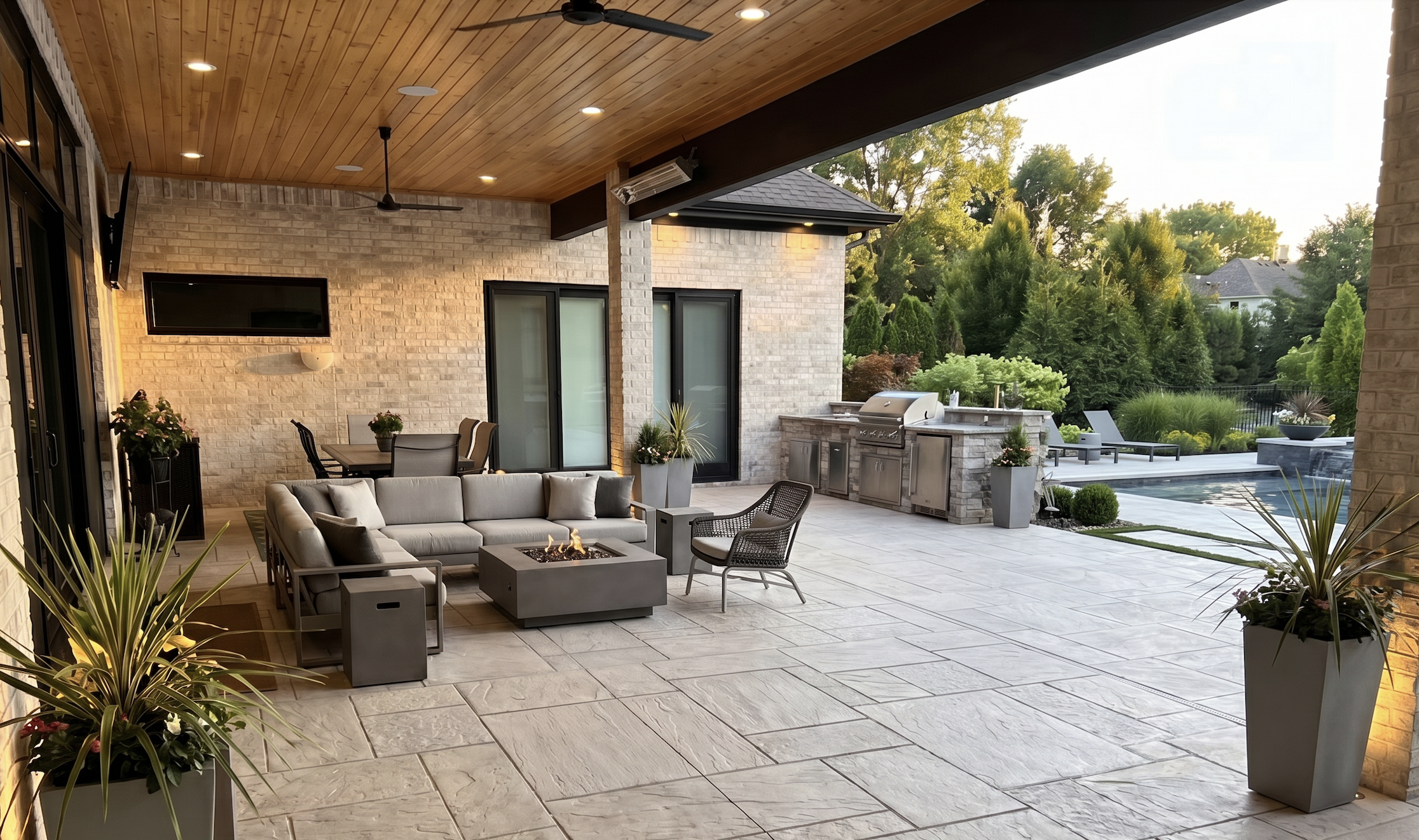
Of course, as every home cook knows, the kitchen doesn't end at the countertop, which is where Porcelanosa truly shines. Thanks to the company's deep expertise in high-traffic areas, every material it offers is equally hard-wearing.
Its designers consider every detail along the way. A smaller kitchen benefits from deep drawers (rather than lower cabinets) and fewer grout lines, which make the room feel more continuous and open. A larger kitchen, on the other hand, is the perfect place for a generous dine-in island (perhaps with built-in outlets and specialized appliance shelving). Integrated handles give cabinetry a seamless feel while minimizing snags and bumps.
With the holiday season on the horizon, a kitchen that can keep up has never been more important. An elaborate mosaic stone backsplash may look great on a mood board, but in reality, cleaning between every tiny tile becomes a headache almost immediately. A Porcelanosa slab, by contrast, has a non-porous surface and no grout lines to trap grime, so it needs only a quick wipe to look presentable (ideal if the family's already en route and a spill happens unexpectedly). In a space that serves as a communal gathering place, makeshift dining room, and late-night snacking destination, the devil is most definitely in the details.
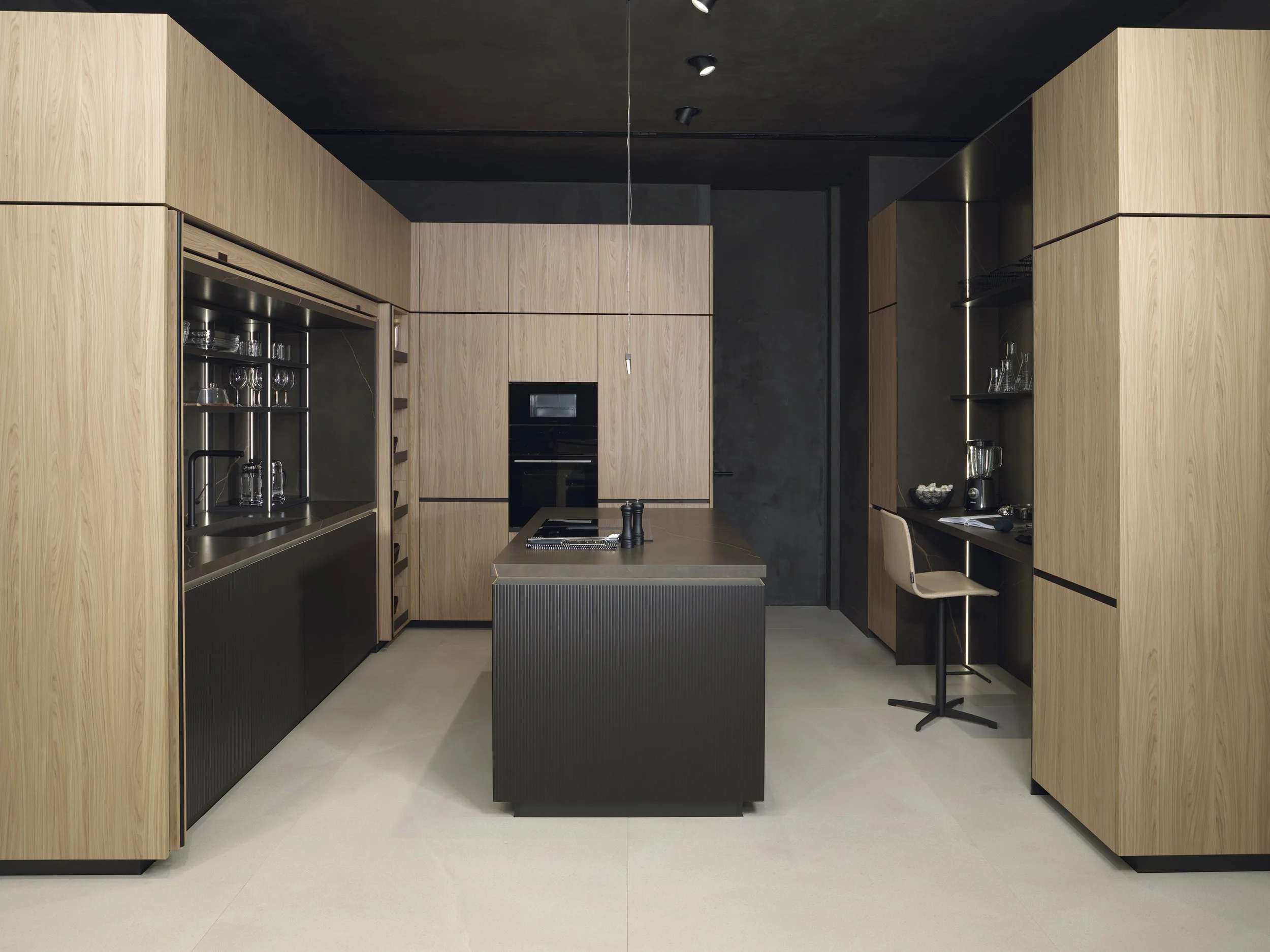
“You dream it, we make it happen.”
“You dream it, we make it happen.” The banner displayed proudly on Porcelanosa’s site reinforces the company’s commitment to crafting interiors that are as beautiful as they are functional. For the heart of the home, what more could we want?
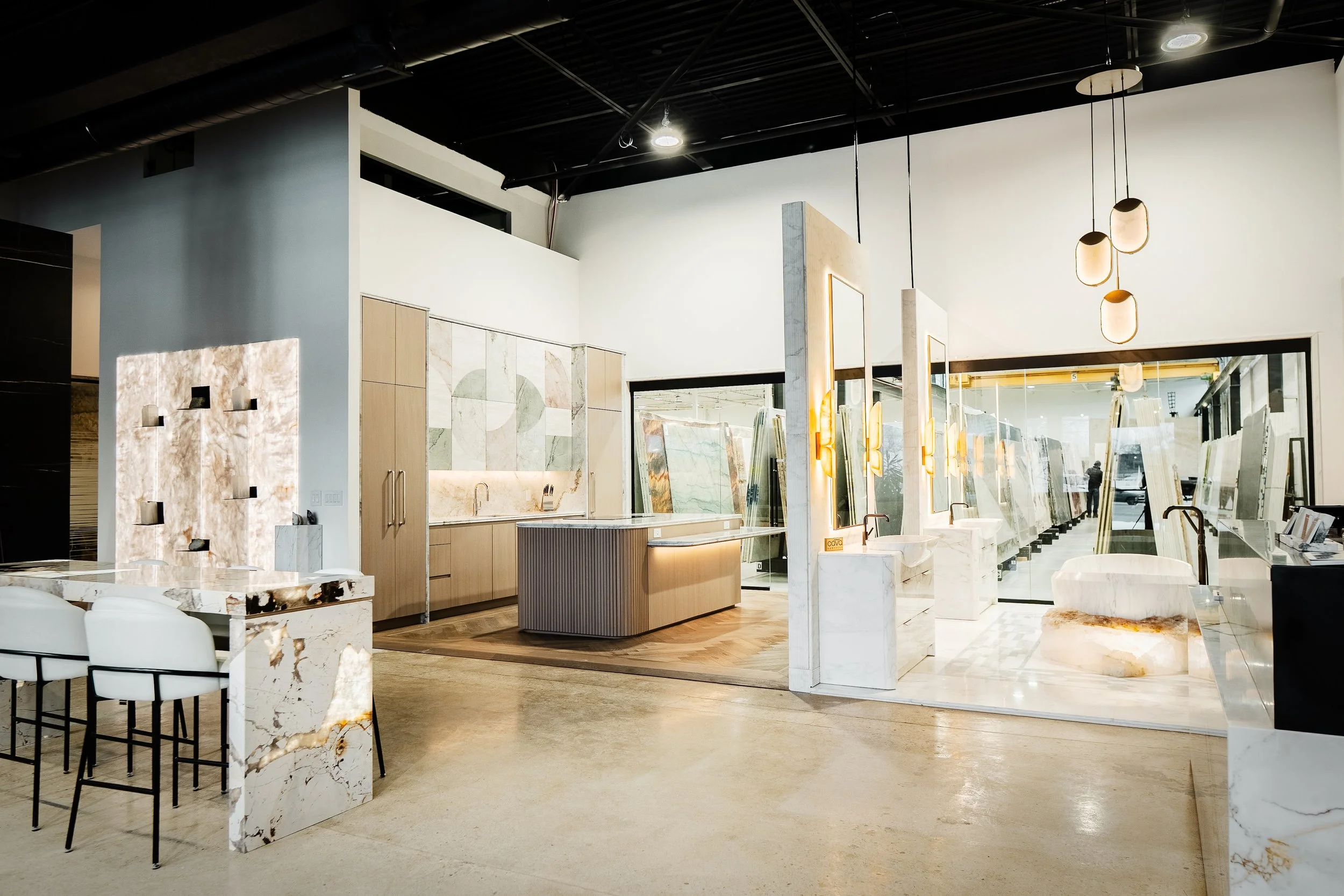
Ready to rethink your kitchen? Explore Porcelanosa's porcelain countertops and kitchen collections, or visit your nearest showroom to see the slabs in person.
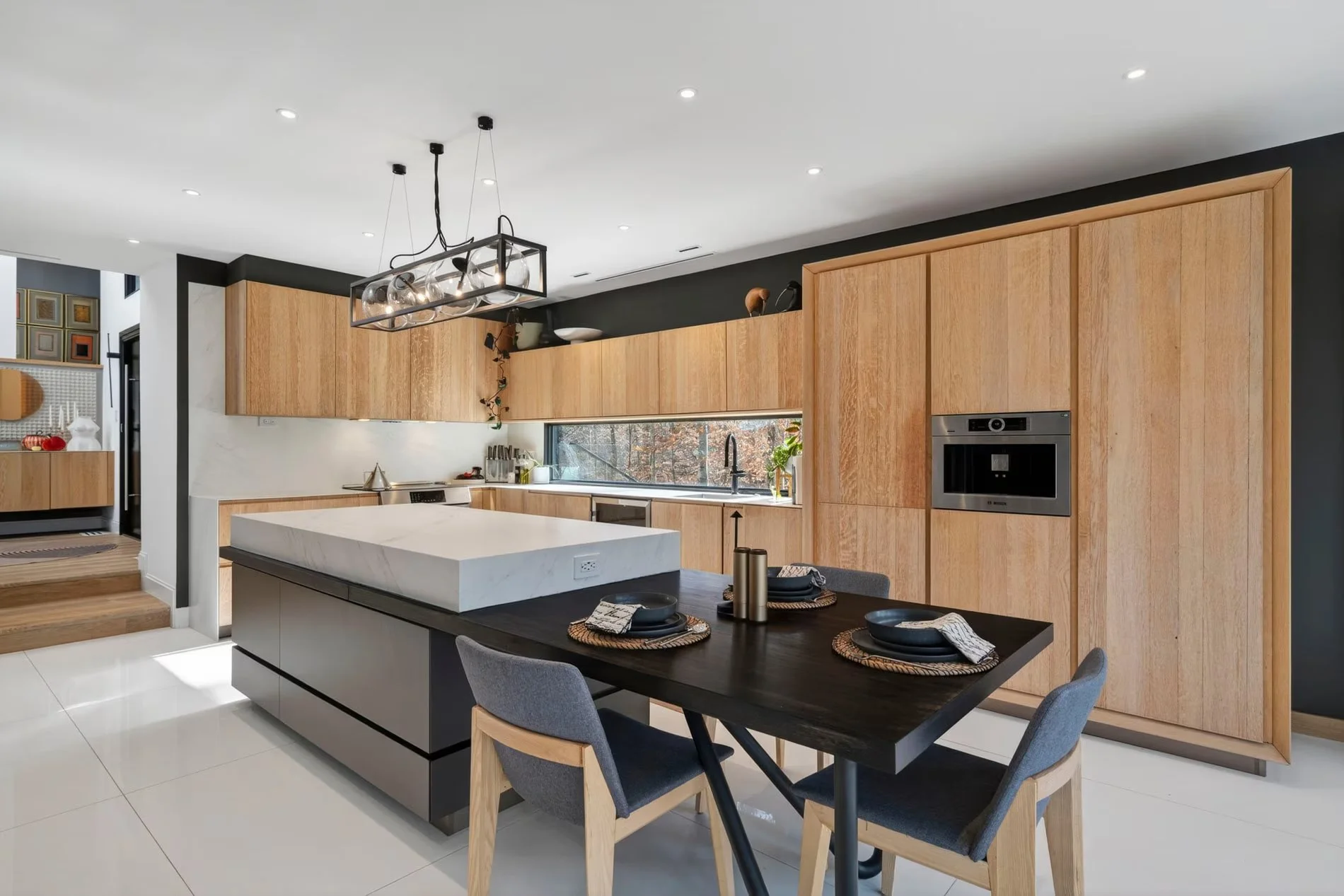
PORCELANOSA Toronto
735 Caledonia Road, Toronto
info@porcelanosa.com
4167825394
With over 970 stores throughout the world and a constantly expanding distribution network in cities like New York, London, Paris or Milan, PORCELANOSA showrooms guarantee the group’s presence on all five continents.
Related Posts